
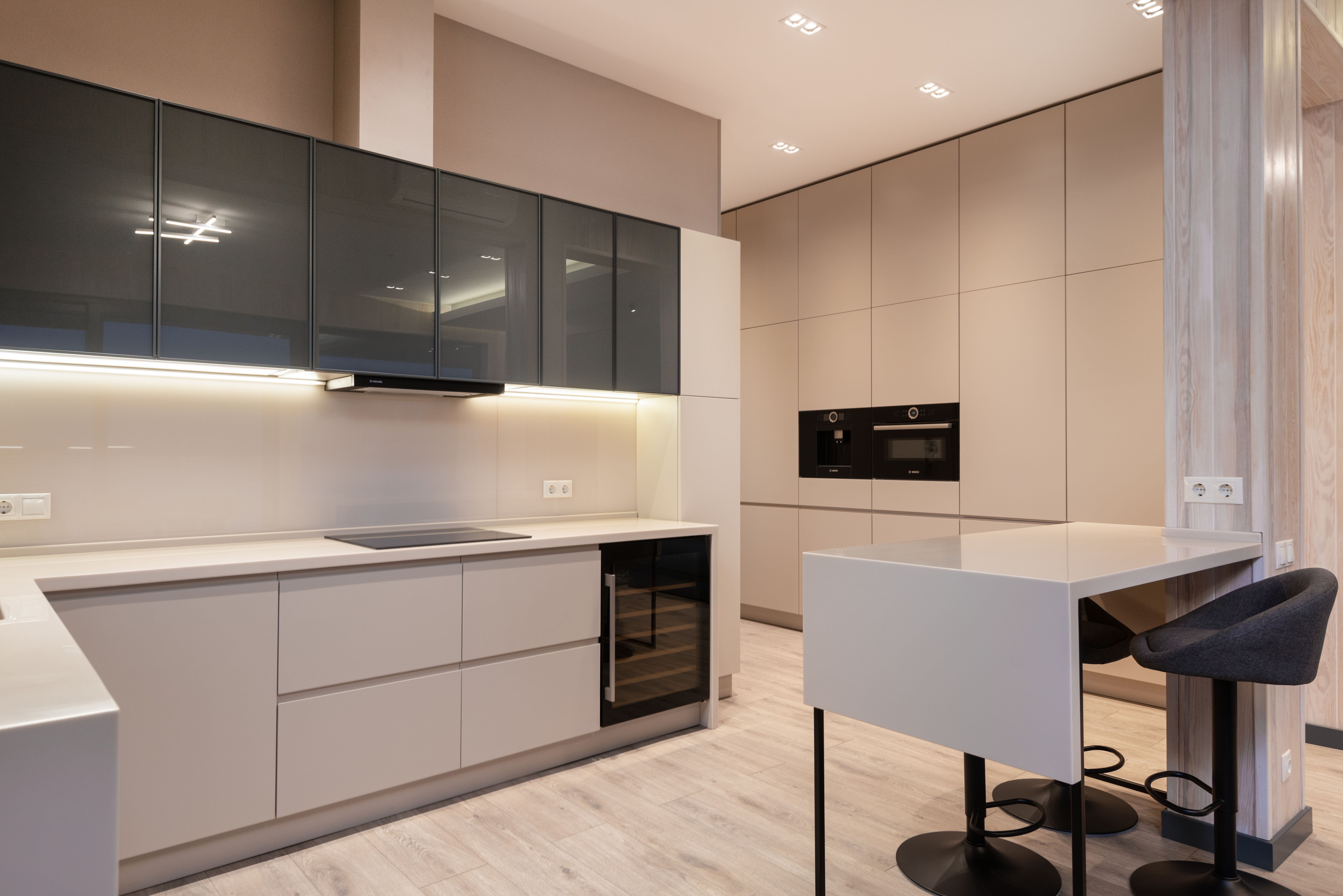
False Ceiling and Lighting for Bangalore Homes
POP versus gypsum, cove and profile lighting, height loss and cost — how to get false ceiling right in an apartment.
False ceiling is the highest-impact rupee in most interior budgets, and the most commonly overdone. Done well it hides wiring, delivers layered light and gives a room proportion. Done badly it eats ceiling height and dates within five years.
POP or gypsum?
| Gypsum board | POP | |
|---|---|---|
| Finish | Very flat, crisp lines | Can be moulded into curves |
| Install | Dry, faster, less mess | Wet, slower, dustier |
| Cracking | Less prone with proper jointing | More prone at joints |
| Curves | Limited | Excellent |
| Cost | Slightly higher | Slightly lower |
For most Bangalore apartments gypsum board on a GI frame is the right default. POP earns its place where the design genuinely needs curves.
Mind your ceiling height
Most Bangalore apartments have 9 to 10 feet slab-to-slab. A full false ceiling takes 4 to 6 inches. Below about 9 feet, a full drop starts to feel oppressive — use a peripheral cove instead of a complete second ceiling, which gives you the lighting benefit with a fraction of the height loss.
The lighting is the point
A false ceiling without a lighting plan is just a lowered ceiling. What to include:
- Cove lighting — indirect LED strip in a recess, washing the ceiling. Warm 2700–3000K for living and bedrooms.
- Profile lights — recessed linear fittings, crisper and more contemporary than spotlights.
- Spots on the art or the TV wall — accent, not general light.
- Task light — under kitchen uppers, at the desk, at the bedside. Non-negotiable.
- Dimming — on the living and bedroom circuits. Cheap at wiring stage, impossible to retrofit neatly.
What it costs
False ceiling and lighting with us starts from ₹65,000. A full 2 BHK with cove and profile lighting and the associated wiring changes usually lands between ₹60,000 and ₹1 Lac; a 3 BHK between ₹90,000 and ₹1.5 Lac.
Mistakes we see
- Full drop ceilings in flats with 9-foot heights.
- Cool white LEDs in bedrooms — clinical and unrestful.
- Spotlights used as general lighting, so the room is patchy.
- No dimming circuit, so the only options are bright or off.
- Ceiling designed before the furniture layout, so lights land in the wrong places.