
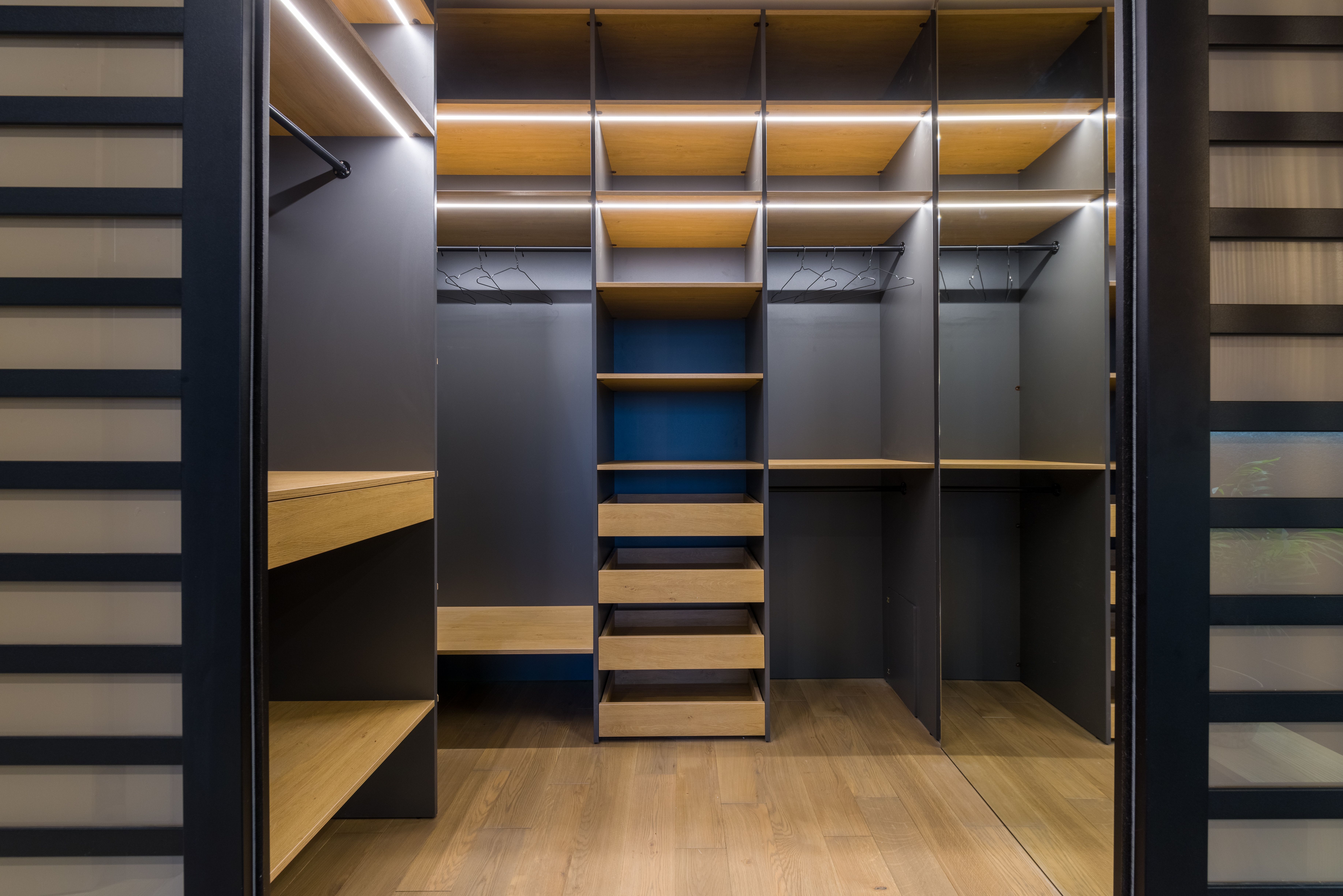
Wardrobe Design for Bangalore Homes: Internals That Work
Sliding versus hinged, the dimensions that matter, and how to plan wardrobe internals around what you actually own.
Everyone discusses wardrobe shutters. Almost nobody discusses the internals, which is the part you interact with every morning for a decade.
Sliding or hinged
Hinged if the room can spare about 600mm of swing space — you see the full width at once, and it costs less. Sliding when the bed or a walkway sits closer than that; you reclaim the floor but you can only ever open two-thirds of the wardrobe, and the track adds 15–25% to cost.
Count your clothes before you design
This sounds trivial and it is the whole job. Saris need different depth and hanging length than shirts. Suits need full height. Knitwear wants shelves, not hangers. A wardrobe built from a generic template typically wastes a third of its volume on hanging nobody uses.
The dimensions
| Element | Dimension |
|---|---|
| Carcass depth | 600mm (below 550mm shirts crease) |
| Long hanging | 1,400–1,600mm height |
| Short hanging | 900–1,050mm (stackable in two tiers) |
| Folded shelf spacing | 300–350mm |
| Accessory drawers | 150–200mm |
| Knitwear drawers | 250mm+ |
| Loft / seasonal | Above 2,100mm |
Worth including
- Full-length mirror inside a shutter or on a pull-out
- Pull-out trouser rack if you wear formals
- Lockable drawer or concealed safe cavity
- Sensor LED strip on the top shelf — used daily, costs little
- Laundry pull-out, so the chair stops being the laundry basket
Go to the ceiling
Stopping at 7 feet creates a dust ledge you will clean forever and wastes 600mm of perfectly good seasonal storage. Full height also makes the room read taller.
Bangalore-specific note
If the wardrobe shares a wall with a bathroom, specify BWP marine ply for the carcass rather than BWR. Sustained monsoon damp travels through masonry, and this is the single most common cause of wardrobe back panels failing in Bangalore flats.
Full detail in our wardrobe design guide.